Building Bridges to our Past and Future

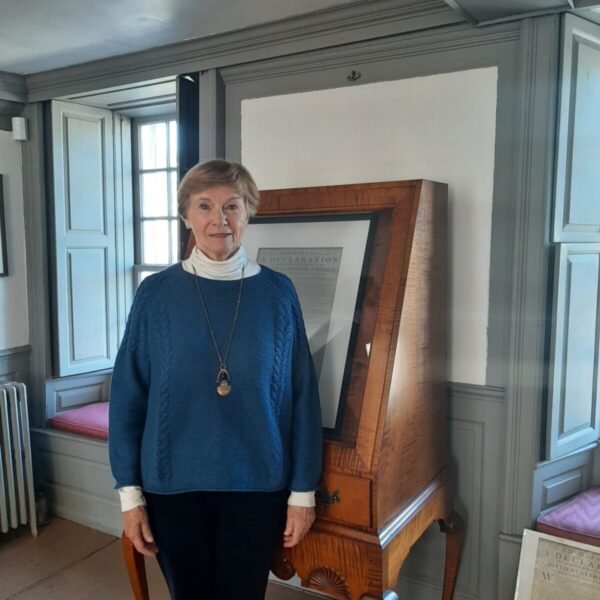
Working statewide for many years with various nonprofits as a volunteer, nonprofit consultant, and in leadership roles as a staff member, longtime Exeter resident Karen Prior took a step closer to home in 2024. She took this step at the behest of Dr. Judy Rowan, who called to invite her to join the board of the American Independence Museum (AIM).“I was like, ‘yes,’” recalls Karen. “I had been frustrated by the national dialogue, the lack of civil engagement, and the polarization. I wanted to make a difference, even in some small way.”

For Karen, the idea of fostering a more civil society resonated deeply, as it mirrored her private reflections on the current state of democracy and the need to rediscover the core principles of respect and inclusivity.

“What is democracy?” she rhetorically notes. “How do we support one another? How do we do better?”

When Karen began her onboarding process at AIM, she credits an initial conversation with Executive Director Jennifer Carr and Board Member Joe Pace, who is now President, as transformative.“Jen especially got me fired up,” explains Karen. “She was so inclusive in her approach. We need to tell the full story of the Revolution, how the country came to be, and how we bring these conversations forward in an inclusive way.”

Her renewed excitement was not just about history. Rather, it was about making AIM relevant and exciting for today’s audience. “We need to fire people up around the story,” she says.

Exeter, once the capital of New Hampshire during the American Revolution, houses seminal historical artifacts such as a Broadside copy of the Declaration of Independence and working drafts of the US Constitution. “It’s a jewel in the crown of the state, and no one knows about it,” she adds.

Karen sees the 250th anniversary of American independence in 2026 as a pivotal moment for AIM. “We’ve got the nation’s 250th coming up,” she notes. “If we’re not put on the map by then, we’re missing an opportunity.”

For her, this anniversary is not just about looking back—it is about using history as a springboard to foster civil discourse and engage the public in meaningful, relevant ways.

“We have to start having these intense conversations to build bridges,” she says. “The organization has two huge charges in front of it—delivering incredibly important programming and maintaining the historic buildings. We need to get more people engaged in both.”

Karen’s belief in the power of dialogue is at the core of her involvement at AIM, as she acknowledges she is increasingly concerned about the state of discourse in today’s society. “Can we have a dialogue where we discuss opposing viewpoints in a civil way?” she asks.

Karen draws inspiration from New Hampshire Listens, an initiative out of UNH that trains facilitators to guide civil discussions. “You get two people together, and there’s always disagreement,” she notes, “but it’s become so uncivilized. How do you build a better democracy?”

This question can be explored at AIM. “Let’s really look at the facts of what happened, but it’s got to be inclusive of all voices—people of color, women, people who identify as part of the LGBTQ+ community, and other marginalized people,” she states.

Karen’s passion for inclusive history also stems from her belief in the power of artifacts to connect people with their past and future. “Our artifacts speak to our souls,” she says. “They are jumping-off points for conversation, and the more informed we are, the more impactful those conversations become.”

These conversations can find a home at AIM. “We have a chance to be a change agent in New Hampshire and beyond,” she says. “I believe we can build bridges to our past and our future.”

UNH Brewing Science Laboratory Headlines Final 2024 Beer for History

UNH Beer for History

On Thursday, November 21, 6:00 p.m. to 8:00 p.m., the American Independence Museum (AIM) will host their final Beer of History of 2024, featuring beer brewed by UNH Brewing Science Laboratory.

“We are excited to welcome UNH Brewing Science Laboratory back this year,” said Interim Executive Director Jennifer Carr. “Their beers are fantastic and always creative.”

At the event, presented by Donahue, Tucker & Ciandella, the Brewing Science Laboratory will offer three beers brewed by students at the University’s main campus in Durham. These beers include: Pour-over Porter (dark, rich beer with coffee-forward flavors), Fluke Vienna Lager (copper-colored, slightly sweet, slightly hoppy, crisp lager), and Special Harvest Thyme Brown Ale (made with thyme from the UNH high tunnels, pumpkins, and sweet potatoes from Woodman Farm, hops from the organic garden club, and bread from the dining hall).

“Brewing Science Laboratory always comes with unique beers, so this is a chance to try brews you won’t find anywhere else,” added Carr.

The event also features an educational element with a theme, Abenaki Autumn Traditions and Thanksgiving Myths, that will be explored by Paul and Denise Pouliot of the Cowasuck Band of the Pennacook-Abenaki People.

“Paul and Denise will lead a fascinating program that provides insights into the Indigenous traditions honored at this time of year,” said Carr. “There are many myths surrounding the Thanksgiving holiday. We are thrilled to have Paul and Denise share an Indigenous perspective with us.”

In addition to craft beer and special programming, Beer for History features pizza donated by Otto Exeter, trivia at 6:30 p.m., and sea shanty sing-alongs at 7:00 p.m. The event features both indoor/outdoor seating and a firepit (weather permitting).

Priced at $20 for AIM members and $25 for non-members, Beer for History tickets include beer and pizza. Tickets for guests ages 13-20 are free. An adult must accompany those under 18 years old.

Beer for History will occur at AIM’s Folsom Tavern (c. 1775) on Thursday, November 21 from 6:00 p.m. to 8:00 p.m. at 164 Water St., Exeter, NH.

Home to 3,000 historic artifacts, including an original copy of the Dunlap Broadside (Declaration of Independence), AIM develops programs, events, and exhibits that engage people of all ages in the ongoing struggle for freedom and self-governance. AIM is sponsored in part by The Society Of The Cincinnati In The State Of New Hampshire, Service Credit Union, New Hampshire Charitable Foundation, and William W. Treat Foundation.

About American Independence Museum

Located in Exeter, NH, the American Independence Museum features a rare collection of historic artifacts that shed light on the Revolutionary War. Examples of popular items in our exhibits include a dragoon pistol, brown bess musket, and 18th century powder horn. Many of our programs offer insight into civic duties, civic engagement and civic responsibility, while we also feature a variety of things to do in NH, such as camps for kids, festivals, summer festival, reenactments, and homeschool programs. Perfect for a day trip or weekend trips, we believe in inclusivity and inclusive history and the spirit behind the phrase, ‘we the people’.

AIM to Host Real Pirates Salem at Beer for History Event

Czar's Beer for History event

On Thursday, November 7 at 6:00 p.m., the American Independence Museum (AIM) will welcome Real Pirates from Salem, Massachusetts to historic Folsom Tavern (1775) for a maritime-themed Beer for History event.

At the event, presented by Donahue, Tucker & Ciandella, staff from Real Pirates Salem will introduce the story of the Whydah, a ship that sank off the coast of Cape Cod in April of 1717. The team will also share artifacts recovered in recent years from a 1715 Fleet ship of that same time period.

“Maritime culture has always been vital to New England,” said AIM Interim Executive Director Jennifer Carr. “Hearing about the Whydah, the source of the world’s only fully authenticated pirate treasure today, makes this event such a unique opportunity.”

Based in Exeter, The Czar’s Brewery will provide craft beer for the event, while pizza will be available from OTTO Exeter. In addition to the programming and craft beer, the event will feature sea shanty sing-alongs, indoor/outdoor seating, and a firepit (weather permitting).

Priced at $20 for AIM members and $25 for non-members, Beer for History tickets include beer and pizza. Tickets for guests ages 13-20 are free. Those under 18 years old must be accompanied by an adult.

Beer for History with Real Pirates Salem will occur at AIM’s Folsom Tavern (c. 1775) on Thursday, November 7 from 6:00 p.m. to 8:00 p.m. at 164 Water St., Exeter, NH. The last Beer for History of the season will take place on Thursday, November 21 and feature beer from UNH BrewLab.

Home to 3,000 historic artifacts, including an original copy of the Dunlap Broadside (Declaration of Independence), AIM develops programs, events, and exhibits that engage people of all ages in the ongoing struggle for freedom and self-governance. AIM is sponsored in part by The Society Of The Cincinnati In The State Of New Hampshire, Service Credit Union, New Hampshire Charitable Foundation, and William W. Treat Foundation.

About American Independence Museum

Located in Exeter, NH, the American Independence Museum features a rare collection of historic artifacts that shed light on the Revolutionary War. Examples of popular items in our exhibits include a dragoon pistol, brown bess musket, and 18th century powder horn. Many of our programs offer insight into civic duties, civic engagement and civic responsibility, while we also feature a variety of things to do in NH, such as camps for kids, festivals, summer festival, reenactments, and homeschool programs. Perfect for a day trip or weekend trips, we believe in inclusivity and inclusive history and the spirit behind the phrase, ‘we the people’.

American Independence Museum to Offer “Spooky” Stroll

Water Street Cemetery

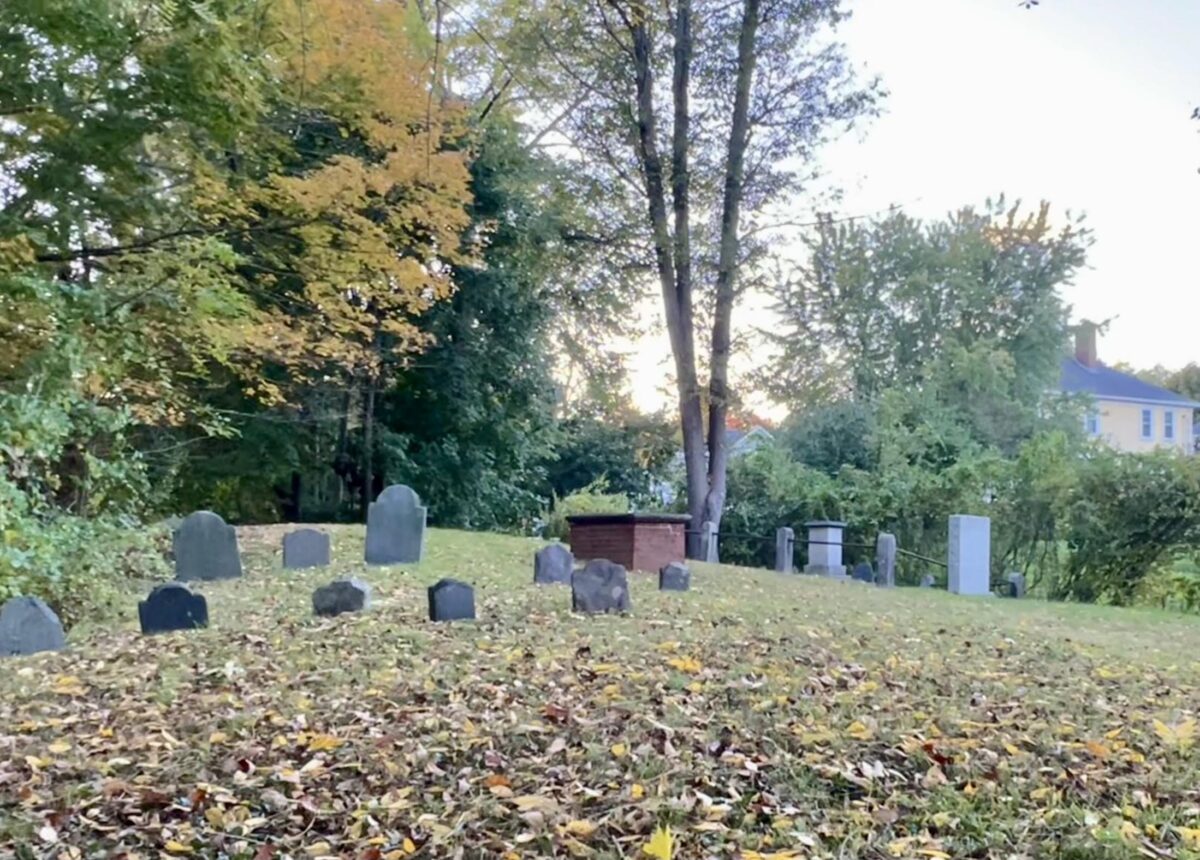
On Sunday, October 27, at 5:00 p.m. and 7:30 p.m., the American Independence Museum (AIM) will offer a “spooky” walking tour, Exeter After Dark: Crime, Haunts, and Local Lore. Beginning at Folsom Tavern (1775), the 1.5-mile tour will explore the historic streets of Exeter and Water Street Cemetery. While strolling, guests will learn about alleged ghost sightings, UFOs, and the town’s darkest mysteries.

The 90-minute tour will also focus on the supernatural history of AIM and Folsom Tavern, where spiritualists, who believed the spirits of the dead could communicate with the living, once gathered. The tour will also discuss true crime, including serial killer H.H. Holmes’ connection to Exeter.

“We are so excited to offer a spooky tour right before Halloween,” said Interim Executive Director Jennifer Carr. “We can’t wait to share some of these chilling stories while literally walking past the places where they happened.”

Tickets for Exeter After Dark: Crime, Haunts, and Local Lore are $15 for AIM members and $20 for non-members. Guests should arrive at Folsom Tavern, 164 Water Street, 10 minutes before the scheduled tour time.

The walking tour is not the only supernatural event of the season at AIM, which will also welcome North East Paranormal Associates, a group of paranormal investigators, for Beer for History on Thursday, October 24. Click here to purchase tickets to Beer for History.

Home to 3,000 historic artifacts, including an original copy of the Dunlap Broadside (Declaration of Independence), AIM develops programs, events, and exhibits that engage people of all ages in the ongoing struggle for freedom and self-governance. AIM is sponsored in part by The Society Of The Cincinnati In The State Of New Hampshire, Service Credit Union, New Hampshire Charitable Foundation, and William W. Treat Foundation.

About American Independence Museum

Located in Exeter, NH, the American Independence Museum features a rare collection of historic artifacts that shed light on the Revolutionary War. Examples of popular items in our exhibits include a dragoon pistol, brown bess musket, and 18th century powder horn. Many of our programs offer insight into civic duties, civic engagement and civic responsibility, while we also feature a variety of things to do in NH, such as camps for kids, festivals, summer festival, reenactments, and homeschool programs. Perfect for a day trip or weekend trips, we believe in inclusivity and inclusive history and the spirit behind the phrase, ‘we the people’.

Stepping Up for Democracy (Q&A with Judy Rowan)

How did you become involved with the American Independence Museum (AIM), and what motivated you to join the board?
I joined the board five years ago and am currently in the second year of my second term. I’ve always been a community activist, believing in individuals enhancing the quality of life and doing what they can for the community. I also have a lifelong interest in history, having served on the board of Historic Salem in the 1970s and on Exeter’s Historic District Commission for 13 years. When I was approached by a current board member to join, it felt like a great opportunity to contribute to educating the next generation about our history, especially in today’s politically divided climate. AIM does a wonderful job of bringing revolutionary history to life and helping visitors understand its relevance today.
What inspires you about the stories AIM shares, and how do you see the museum’s role in today’s society?
I’m inspired by the incredible stories of everyday people who stepped up during the Revolutionary War era, risking their livelihoods to help found our nation. AIM brings that history to life, showing the sacrifices and struggles of responsible citizens and activists. In today’s world, I believe we are again challenged to step forward and defend democracy. The museum plays a crucial role in educating people, particularly the next generation, about the importance of preserving this form of government that was created through great effort. 

What aspects of history have you discovered or learned more about through your involvement with AIM?
One of the most eye-opening aspects has been learning about slavery in the northern colonies and the role women played in major historical events. As more museums and historians delve into these areas, we are uncovering stories that have been overlooked. It’s important to tell these stories so people can see themselves in history, regardless of their background. We are a diverse nation, and sharing these stories helps communicate that we are all part of our history, lineage, and legacy.

Can you share a personal story of how you’ve introduced people to AIM and what impact it had?
Just last night, I was at a fundraiser for a fine crafts store in Exeter, and I spoke with some people from Rye who had never been to AIM. I told them about the museum’s unique artifacts, including the state’s original broadside and handwritten notes on the Constitution. Standing in front of these documents brings history to life—you can see the people who lived in that house and played significant roles in our nation’s history. I encouraged them to visit and be a part of this rich legacy.

What do you see for the future of AIM, and how does the board contribute to its growth?
I see a strong future for the museum. We now have a very active board, and we are in the process of developing a new strategic plan that will further our mission of bringing history to life. The museum is an active place, offering educational opportunities for both kids and adults and hosting joyful events like the annual festival. We are working to ensure the museum continues to thrive for many years to come, preserving its legacy and educating future generations.

What message do you hope visitors, especially younger generations, take away from the museum?
I hope visitors come to see that historical figures weren’t a different category of person—they were like us. The message we want to convey is that we all have the potential to make a difference. By telling these stories, we encourage people, especially the younger generation, to take pride in democracy, understand their role in history, and step up in their own lives to make the world a better place. Democracy is a living thing, and we need caretakers of it across time.

AIM to Welcome Sam von Trapp at Beer for History

Von Trapp Brewing at Beer for History

On Thursday, October 24 at 6:00 p.m., the American Independence Museum (AIM) will welcome Sam von Trapp and von Trapp Brewing to historic Folsom Tavern (1775) for Beer for History, presented by Donahue, Tucker & Ciandella. Sam von Trapp is the grandson of Maria and Georg (Captain) von Trapp, the family who inspired The Sound of Music.

“We are honored to welcome Sam back to Folsom Tavern,” said AIM Interim Executive Director Jennifer Carr. “He will bring both his rich family history and an assortment of unique and delicious beers, which is incredibly fitting for this event.”

These beers will include Bohemian Pilsner (Czech-style pale lager), Dunkel (Munich-style dark lager), and Stowe Style Kellerbier (a contemporary take on the traditional unfiltered lagers of Franconia, Germany).

The evening’s theme is “Spiritualism,” a 19th-century movement with ties to America’s founding principles on freedom of religion. “There will be a panel exhibit on former resident George Washington Dearborn, a spiritualist who owned a curio shop,” explained Carr. “We will also have a group of paranormal investigators, who will discuss their experiences and demonstrate how they use some of their equipment.”

In addition to the special programming and craft beer, the event will feature pizza from OTTO Exeter, live music (where people can sing along), and indoor and outdoor seating.

“This is going to be such a fun event,” added Carr. “Bring your friends and enjoy a night out—it’s the perfect opportunity for a date night.”

Tickets for Beer for History are $20 for AIM members and $25 for non-members. Tickets for guests ages 13-20 are free. Those under 18 years old must be accompanied by an adult. Beer for History with von Trapp Brewing will occur at AIM’s Folsom Tavern on Thursday, October 24 from 6:00 p.m. to 8:00 p.m. at 164 Water St., Exeter, NH.

Beer for History kicked off on Thursday, October 10 with Sawbelly Brewing. Other brewers in the series include Czar’s Brewing and UNH BrewLab.

Home to 3,000 historic artifacts, including an original copy of the Dunlap Broadside (Declaration of Independence), AIM develops programs, events, and exhibits that engage people of all ages in the ongoing struggle for freedom and self-governance. AIM is sponsored in part by The Society Of The Cincinnati In The State Of New Hampshire, Service Credit Union, New Hampshire Charitable Foundation, and William W. Treat Foundation.

About American Independence Museum

Located in Exeter, NH, the American Independence Museum features a rare collection of historic artifacts that shed light on the Revolutionary War. Examples of popular items in our exhibits include a dragoon pistol, brown bess musket, and 18th century powder horn. Many of our programs offer insight into civic duties, civic engagement and civic responsibility, while we also feature a variety of things to do in NH, such as camps for kids, festivals, summer festival, reenactments, and homeschool programs. Perfect for a day trip or weekend trips, we believe in inclusivity and inclusive history and the spirit behind the phrase, ‘we the people’.

Indigenous New Hampshire Collaborative Collection Highlights AIM’s Educational Gardens

AIM educational garden

Indigenous New Hampshire Collaborative Collective recently published an article written by AIM Interim Executive Director Jennifer Carr about the museum’s interpretive garden exhibit.

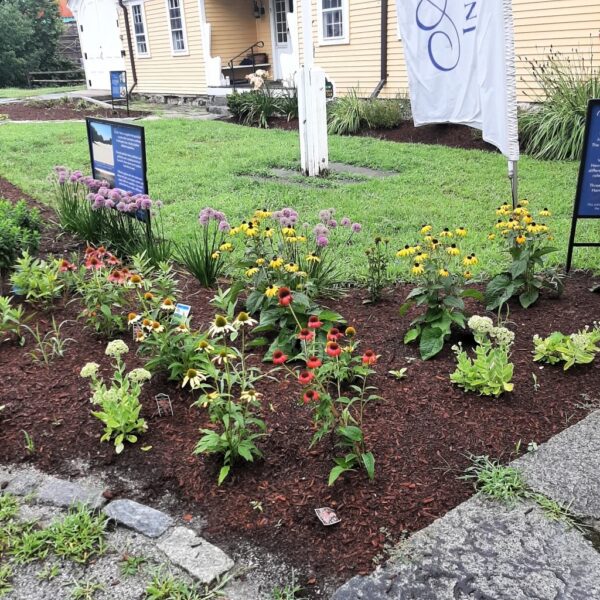
The outdoor gardens represent a timeline that explores changes in land use as a result of colonization. The garden exhibit is split into three sections: native plantings that would have been used by Indigenous people for food, medicine, and ceremonial purposes, an 18th-century kitchen garden common among Euro-American colonizers, and a contemporary pollinator garden.

AIM plans to add more plantings in the spring of 2025 and will use the gardens for educational programming, offering students the opportunity to interact with, taste, and smell history.

Click here to read Carr’s article on the Indigenous New Hampshire Collaborative Collection website.

First Fall Beer for History Kicks Off

Guests chat during Beer for History event

On Thursday, October 10 from 6:00 p.m. to 8:00 p.m. at historic Folsom Tavern (1775), the American Independence Museum (AIM) will host its first fall Beer for History with Sawbelly Brewing.

Sponsored by Donahue, Tucker & Ciandella, the event features indoor and outdoor seating, live music, and pizza donated by Exeter Bowling Lanes & Shooters Sports Pub. The event will also feature the exhibit, Arming the Revolution, which provides insight into colonial guns and ammunition.

“We are so excited to bring back Beer for History this year,” said Interim Executive Director Jennifer Carr. “It’s such a fun event that welcomes the community to a space that has been used to bring people together for nearly 250 years.”

Sawbelly Brewing will offer three draft beers: Broken Luck Kolsch, New England IPA Volcano Bomb, and a Double Hazy IPA, Ring of Haze, the latter of which is triple dry hopped with Galaxy, Simcoe, and Citra. The Exeter-based brewery will also provide an assortment of cans.

“We are thrilled to welcome Sawbelly Brewing to Beer for History,” added Carr. “Their selection will certainly complement the event.”

Tickets for Beer for History are $20 for AIM members and $25 for non-members. Tickets for guests ages 13-20 are free. Those under 18 years old must be accompanied by an adult. Beer for History with Sawbelly Brewing will take place at AIM’s Folsom Tavern on Thursday, October 10 at 164 Water St., Exeter, NH.

Home to 3,000 historic artifacts, including an original copy of the Dunlap Broadside (Declaration of Independence), AIM develops programs, events, and exhibits that engage people of all ages in the ongoing struggle for freedom and self-governance. AIM is sponsored in part by The Society Of The Cincinnati In The State Of New Hampshire, Service Credit Union, New Hampshire Charitable Foundation, and William W. Treat Foundation.

About American Independence Museum

Located in Exeter, NH, the American Independence Museum features a rare collection of historic artifacts that shed light on the Revolutionary War. Examples of popular items in our exhibits include a dragoon pistol, brown bess musket, and 18th century powder horn. Many of our programs offer insight into civic duties, civic engagement and civic responsibility, while we also feature a variety of things to do in NH, such as camps for kids, festivals, summer festival, reenactments, and homeschool programs. Perfect for a day trip or weekend trips, we believe in inclusivity and inclusive history and the spirit behind the phrase, ‘we the people’.

AIM to Celebrate Constitution Week

Exeter Daughters of the Revolution

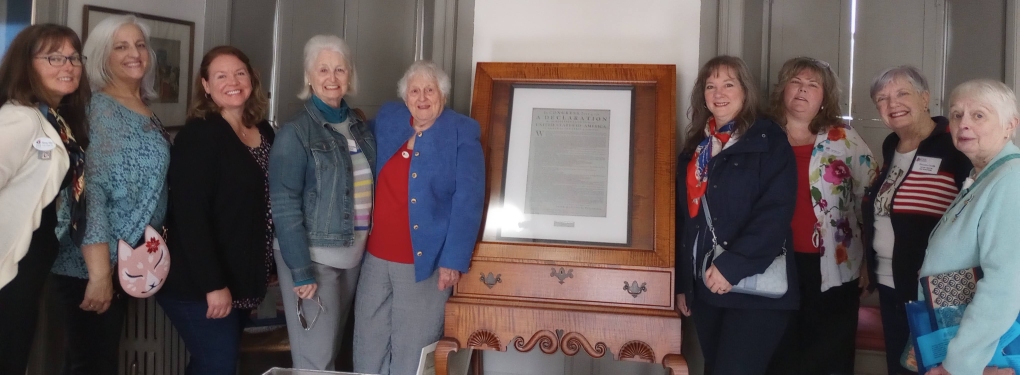
In honor of Constitution Week, Sept. 17 – Sept. 24, the American Independence Museum (AIM) will host a free special program on Wednesday, September 18 for the Daughters of the American Revolution (DAR) and museum members.

Led by an AIM docent, the program will reveal insights into the life of Nicholas Gilman, Exeter resident and signer of the U.S. Constitution, “We will also explore the impact of New Hampshire on the Constitution itself,” said interim Executive Director Jen Carr.

For Renay Allen, vice regent of the Exeter Chapter of the DAR, the opportunity to learn more about the Gilman family and the Constitution is “exciting.” “It’s amazing the kind of history we have right here in Exeter,” she said. “I’m thankful AIM has developed this program for us and their members.”

The day’s festivities begin at 10:00 a.m. for AIM members followed by a presentation at 12 noon for DAR members. “We’ll discuss things you won’t find in our general tours,” added Carr.

Both groups will also have the chance to explore AIM’s new digital exhibits, which are located throughout the Ladd-Gilman House (1721). These exhibits are accessed by devices that feature QR codes. When scanned, these QR codes (virtually) send visitors to digital exhibits that reveal insights into various parts of the Ladd-Gilman House and Folsom Tavern (1775).

“These devices open up parts of the museum that may be challenging for some to access,” explained Carr. “These digital exhibits are an important part of our ongoing efforts to increase access to our collections.”

Home to 3,000 historic artifacts, including an original copy of the Dunlap Broadside (Declaration of Independence), AIM develops programs, events, and exhibits that engage people of all ages in the ongoing struggle for freedom and self-governance. AIM is sponsored in part by The Society Of The Cincinnati In The State Of New Hampshire, Service Credit Union, New Hampshire Charitable Foundation, and William W. Treat Foundation.

About American Independence Museum

Located in Exeter, NH, the American Independence Museum features a rare collection of historic artifacts that shed light on the Revolutionary War. Examples of popular items in our exhibits include a dragoon pistol, brown bess musket, and 18th century powder horn. Many of our programs offer insight into civic duties, civic engagement and civic responsibility, while we also feature a variety of things to do in NH, such as camps for kids, festivals, summer festival, reenactments, and homeschool programs. Perfect for a day trip or weekend trips, we believe in inclusivity and inclusive history and the spirit behind the phrase, ‘we the people’.

The Women’s War: Clothing, Boycotts, and the Fabric of Revolutionary America

Fabric of Revolutionary America
Purchasing clothing and textiles from big-box department stores was an unheard-of luxury two hundred and fifty years ago. In modern times, we have grown accustomed to daring fashion choices, endless selections, and easy accessibility. One’s choice of clothing often signifies a personal statement, bold declaration, or political leaning. 

Trace that notion back to eighteenth-century America, and you will find that many of those principles transcend time and space. Europe was an ever-changing nucleus of fashion during the period, with the latest trends coming out of London, Paris, and Milan. Across the sea, Britain’s colonies still relied on material imports from European fashion hubs to keep up with relevant trends.

However, many of the garments found in the colonies were produced in America by people seeking function over refinement. Of the tools necessary to construct homespun clothing, one of the most significant implements was the hetchel, a comb-like apparatus similar to the one on permanent display in the Ladd-Gilman House. Although this item dates to roughly the 1800s, hetchels can be connected to the American Revolution and the socio-political movements that ignited national independence. 

Throughout the 18th and 19th centuries, hetchels were essential tools used to separate the fibrous strands of the flax plant. Once groomed, these strands were spun into linen filaments on a spinning wheel, becoming the threads used to craft cloth items such as stockings, dresses, bedding, and shirts. Hetchels and other spinning implements allowed women to craft clothing in their homes on their terms (Earle, 1992, p. 167).

As an abundant plant in the colonial landscape, farmers cultivated flax from North to South, making it readily available and ideal for the homestead. While Americans produced goods for exportation, the market, and the home, the importance of local linens reached a pinnacle following the Sugar and Townshend Acts of 1764 and 1767. These decrees, levied by British ministers, taxed the colonies on critical necessities, including china, sugar, paper, and lead. Rising tensions and mercantile pressures compelled Americans to respond by boycotting British commodities and producing local items such as fabric and tea (Raphael, 2016, p. 39).

While male administrators carried the non-importation movement to assemblies, women spearheaded cloth boycotts at home, helping to reduce economic dependence on British commodities. Some women wore their homespun garments as proud statements against British taxation, while groups in Rhode Island and New Hampshire refused to drink tea, substituting their regular indulgences with coffee (Norton, 1996, p. 159). These seemingly simple acts created significant societal change as Americans became less reliant on British imports for survival.

Boycotting allowed women to become instrumental in civic affairs, blending domestic duties with resistance. The significance of female cooperation in America’s dissent compelled men to reconsider the role women would play as the struggle for freedom progressed (Norton, 1996, p. 159). By refusing to consume or wear British products, women, bans, and local products became driving forces of colonial transformation. Such potent non-consumption agreements marked some of the first moments in American history where women could enact substantial political change.

Artifacts like the hetchel remind us of the statements made by American women in the struggle to free the colonies from British tyranny. This tool recalls how, by uniting their public and household obligations, women changed the accessibility of political protests while embodying the declaration of “No Taxation without Representation.” If Britain was going to tax America on critical items, the people would make their own goods, proving they could endure without British mercantilism.

The idea that boycotts and choices of clothing could contribute so significantly to politics was as influential in the 18th century as it is now. Ladies’ groups such as the Daughters of Liberty made significant headway by refusing British policies and proclaiming their sentiments through homespun textiles. This combination of politics, identities, and principles allowed women to transform conventional ideas while establishing themselves in the spaces, structures, and threads of our independent nation.

Bibliography

Earle, Alice Morse. Home Life in Colonial Days. New York: W.W. Norton & Company, 1992.

Norton, Mary Beth. Liberty’s Daughters: The Revolutionary Experience of American Women, 1750-1800. Ithaca: Cornell University Press, 1996.

Raphael. Ray. A People’s History of the American Revolution. New York: The New Press, 2016.

Book Now Book Now